On Free Will
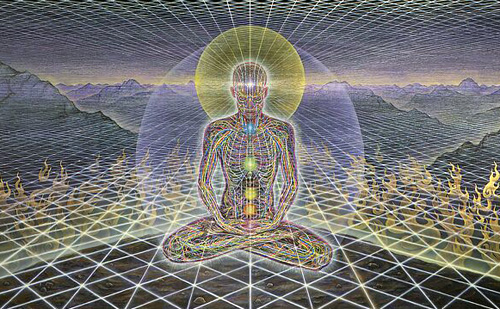
A bevy of experiments in recent years suggest that the conscious mind is like a monkey riding a tiger of subconscious decisions and actions in progress, frantically making up stories about being in control. (…)
In the 1970s, Benjamin Libet, a physiologist at the University of California, San Francisco, wired up the brains of volunteers to an electroencephalogram and told the volunteers to make random motions, like pressing a button or flicking a finger, while he noted the time on a clock.
Dr. Libet found that brain signals associated with these actions occurred half a second before the subject was conscious of deciding to make them.
The order of brain activities seemed to be perception of motion, and then decision, rather than the other way around.
In short, the conscious brain was only playing catch-up to what the unconscious brain was already doing. The decision to act was an illusion, the monkey making up a story about what the tiger had already done. (…)
Another implication is there is no algorithm, or recipe for computation, to determine when or if any given computer program will finish some calculation. The only way to find out is to set it computing and see what happens. Any way to find out would be tantamount to doing the calculation itself.
“There are no shortcuts in computation,” Dr. Lloyd [quantum computing guru and professor of mechanical engineering at MIT] said.
That means that the more reasonably you try to act, the more unpredictable you are, at least to yourself, Dr. Lloyd said. Even if your wife knows you will order the chile rellenos, you have to live your life to find out.
ARTICLE [“Free Will: Now You Have It, Now You Don’t”] (NYT via kottke)